

Statement on Architecture
Design is a dialogue between the individual and his environment. It is about understanding what is possible but also exploring the possibilities of the impossible.
Design lies between boldness and delicacy, complexity and effortlessness. It is truthful process with honest intentions that develop its essence from its complexities and translates into a response to its immediate environment to create a genuine experience, allowing a meaningful dialogue between the person and his environment. Such is my understanding of design.
I have had the blessing of living and emerging in two different cultures of two different countries, Tunisia and Canada, which gave me the chance to understand the environment on a different spectrum and allowing me to forge my identity as designer. My migratory experience has helped understand and embrace my position as a foreigner that allowed me to belong to a place where I can look and critically experience what my immediate environment has to offer.
My admiration for environmental design has always been inspirational to my thoughts, which allowed me to further develop my imagination and influence my creative vision through an experiential design process in an architectural expression. Being able to use my developing skills, my goal is to influence society, as much as it inspired me, through the act of making and conscious decisions to create unique experiences, by using the endless inspirations and valuable opportunities that our environment is offering to human life.
I have learned that architecture communicates its meanings to a disembodied soul, thoroughly by passing the body with its complex feelings and emotions. It evokes space overtime, possessing a certain quality of indefiniteness, creating an atmosphere on which the spirit floats. Space is not something objective or real, neither substance nor accident nor relation, but subjective and ideal arising by fixed law from the nature of the mind. This means that architecture conveyed meanings to more than simply visual perception.
There is a current trend that criticizes architecture as in social crisis due to the lost social relevance between two poles of formal innovation and technical sustainability. However I see architecture as a medium capable of enhancing our human and social values and capacities and operate as the communicative setting in our societies, its beauty and its meaning lie in its connection to human health and self-understanding. Our physical places are of utmost importance for our well-being. Our environment matters not only as a material ecology, but also because it’s nothing less than a constituent part in our consciousness. To be fully self-aware, we need an external environment replete with meanings and emotions. That being said, the entire universe is constructed upon lived world. If we wish to think science rigorously to appreciate precisely its sense and scope, we must first awaken that experience of the world of which science is second- order bearer.
In the last year of my education I have been able to explore these ideas and apply them in my design research to further develop the concept of combining, both science and humanities in architectural realization, without having to sacrifice one or the other. To have both of these ideas integrated in the human life and complement each other, would allow to reach new understanding of what architecture could achieve for humanity. My goal is to research the integration of science to design a meaningful space with consideration to both social behaviors and cultural needs resulting in free and naturalistic inventions acknowledging the desire for something new in architecture.
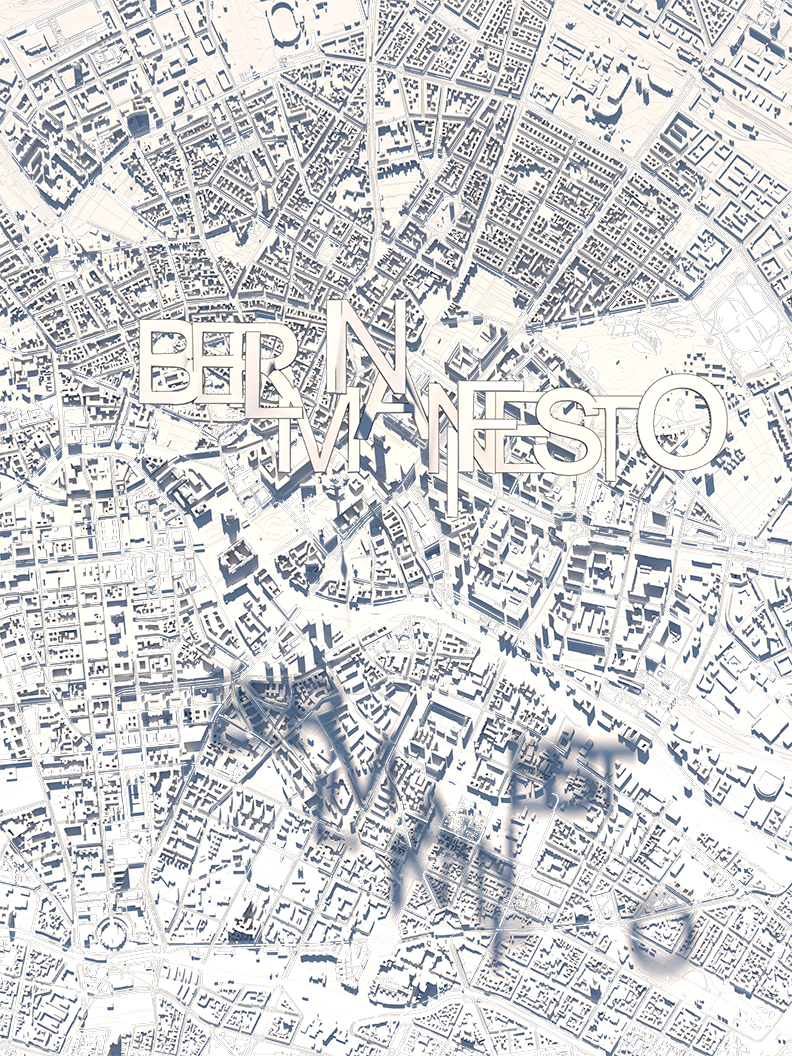
Schwarzwohnen means “illegal living.” The practice can be traced to the occupation of a small apartment block in 1967 on Kleine Marktstraße in the East German city of Halle. Schwarzwohnen was not a marginal phenomenon. Thousands of citizens lived “illegally” in vacated buildings in the 1970-80s in the German Democratic Republic, also known as East Germany. AM Kunsthaus Tacheles was celebrated as one of the most culturally significant squatter houses and alternative art centers in Berlin until it was vacated in 2012. Originally a grand 1902 department store, Tacheles, Yiddish for “straight talking,” was named by a group of Jewish artists who occupied the building after the fall of Berlin Wall in 1989. Due to the subsequent rise of interest in real estate and gentrification, many squatter houses were threatened by demolition. In 2012, the Tacheles was finally vacated after a 20-year battle for ownership with the artists in residence. Today the site has been rebuilt as luxury residences, (completed in 2022). Only a small part of the original 1902 building remains, and the art works have been either demolished or moved to paid-entry galleries. The destruction of Tacheles represents a significant loss of city history and an erasure of many years and layers of artists’ work and culture. This book engages the existential battle over Tacheles. The research investigates tensions between the generic gentrified structure and the free space of the Berlin subculture that is battling for survival and trying to reclaim its original footprint. The design research creatively maps the complex history of the site and looks at strategies of cultural conservation that could save Tacheles in a way that celebrates the site’s historic significance while supporting new multi-cultural artistic communities.

A didactic analysis of Italo Calvino’s Invisible Cities, based on its visual description and spatial organization, to create a map of Marco Polo’s Journey, unknown to the eye but subconsciously referencing an imaginary architectural fabric of cities, and creating a world order.
Map of non-lineal journey of Invisible Cities describes cities and urban order
of architectural spaces, to create a reference in a fantastic setting.
9 typologies referenced for either of the cities which allows an abstract identification based on its visual charachter as narrated.
Hand-drawn with ink on Cotton paper, gold leaf.
BOOK

Architecture World Festival 2021 top 10 Shortlist award - Hybrid category
Archtizer Drawing Of The Year 2021 top 100
In his own words, Macro polo says “The traveler’s past changes according to the route he has followed: not the immediate past, but the more remote past.”
This drawing is a visual journey depicting a passage of italo calvino’s Invisible Cities, through an exploration of different architypes as described in the narrative of his journey. Arriving at each new city, the traveler finds again a past of his that he did not know he had: the foreignness of what man no longer are or no longer possesses lies in wait for man in foreign, unpossessed places. the people who move through the streets are all strangers. At each encounter, they imagine a thousand things about one another; meetings which could take place between them, conversations, surprises, caresses, bites. But no one greets anyone; eyes lock for a second, then dart away, seeking other eyes, never stopping...something runs among them, an exchange of glances like lines that connect one figure with another and draw arrows, stars, triangles, until all combinations are used up in a moment, and other characters come on to the scene.
2022
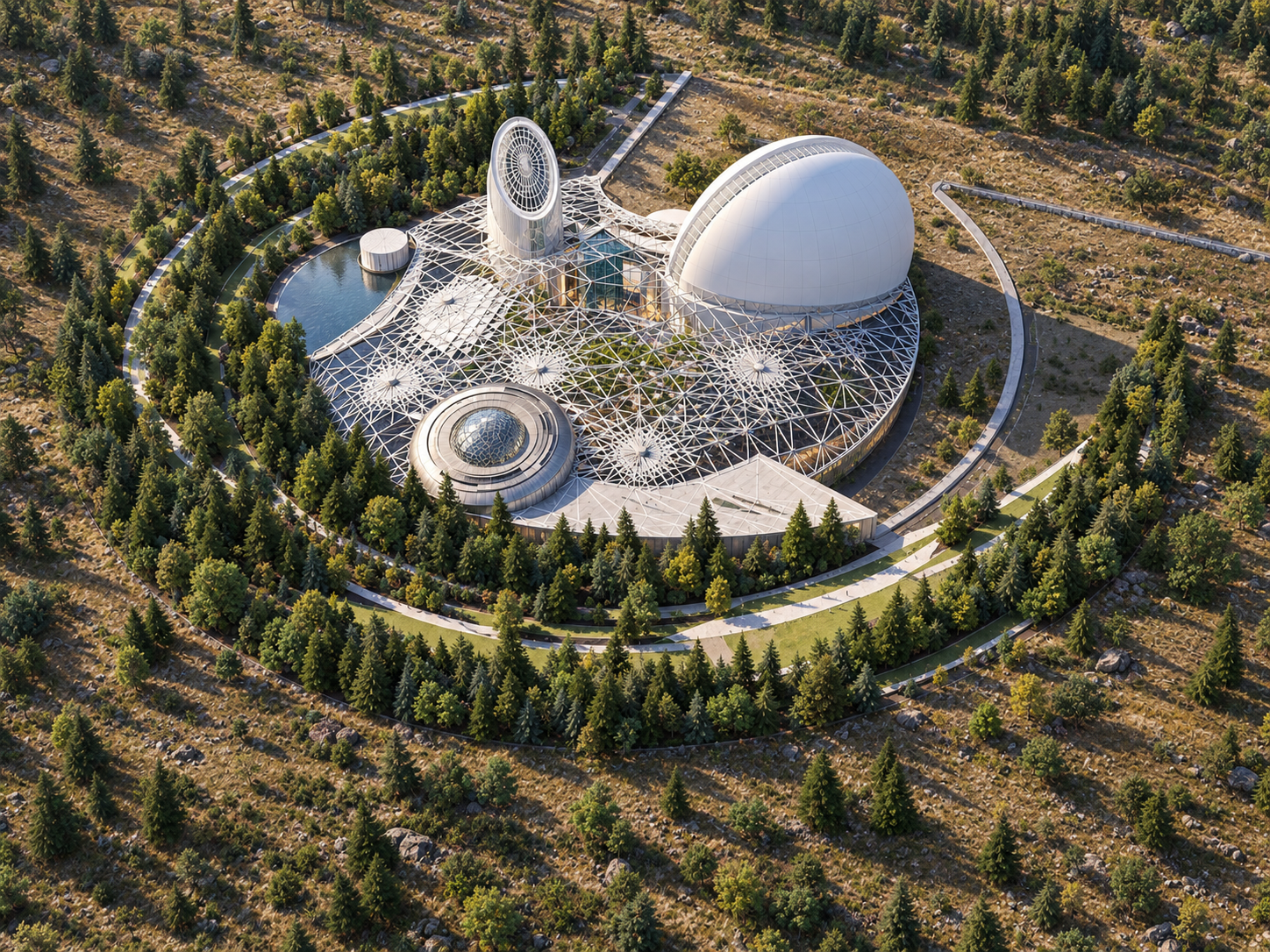
Iceland Reforestation Centre
Climate restoration begins with understanding the natural systems that sustain life. The Reforestation Centre offers research residencies that bring together scientists, ecologists, and designers to explore biodiversity, ecological regeneration, and carbon sequestration. Through interdisciplinary research and experimentation, the centre seeks nature-based solutions that move beyond sustainability toward actively restoring the planet.
Initiate a Productive Dialogue
Complete the form with contextual information regarding your desired outcomes, and I will respond promptly with an evidence-based recommendation framework.